Marketplace app development
Buyers, sellers, and the money in between, handled properly.
Acasa Labs does marketplace app development: seller onboarding, listings, checkout, split payments, payouts, and the dashboards each side needs. We built the creator marketplace inside NoteTube, where educators sell study material through Stripe Connect and see their payouts, balances, and earnings, alongside web and in-app billing.
The problem
The idea is simple. The money is not.
A marketplace sounds like a listing site with a checkout. Then come the hard parts: sellers who need to be verified before they can be paid, a commission to take on every sale, refunds that have to come back out of the right balance, payouts on a schedule, and tax details for each seller. Get the money wrong and you lose sellers first, then buyers. Most marketplace builds stall here, not on the listing pages.
What we build
- 01
Seller onboarding
Sign-up, verification through the payment provider, and a seller profile, so a seller is ready to be paid before their first sale.
- 02
Listings and search
Products, services, or content with the fields your buyers filter by, and search that finds them.
- 03
Split payments and payouts
Checkout that takes your commission, sends the rest to the seller's balance, and pays out on a schedule.
- 04
Dashboards for both sides
Sellers see their sales, balance, and payouts. You see the whole marketplace, with the tools to handle refunds and disputes.
From production
What we learned building NoteTube's marketplace.
Payouts through Stripe Connect
NoteTubeEducators sell study material on NoteTube through Stripe Connect, with payouts, balances, and earnings dashboards for each seller.
Web and app billing kept in step
NoteTubeNoteTube takes payments through Stripe on the web and RevenueCat in the apps, and a scheduled job reconciles subscriptions between them, so a purchase in one place counts everywhere.
Plans enforced in the database
PullsyPullsy's entitlement service over per-seat and per-storefront plans is enforced down to a database constraint, the same way we enforce seller tiers and limits in a marketplace.
Honest trade-offs
Build your marketplace, or start on a builder?
If you are still testing whether buyers and sellers will show up, start on a marketplace builder such as Sharetribe and spend the money on finding both sides. Build your own when the builder's checkout or listing model no longer fits, when the commission structure is unusual, when you need a mobile app on both sides, or when the marketplace is a feature inside a larger product, as it is in NoteTube.
What we reach for
- Next.js
- Expo, React Native
- Stripe Connect
- RevenueCat
- Postgres
- FastAPI
Proof
Shipped, not pitched.
01Our product
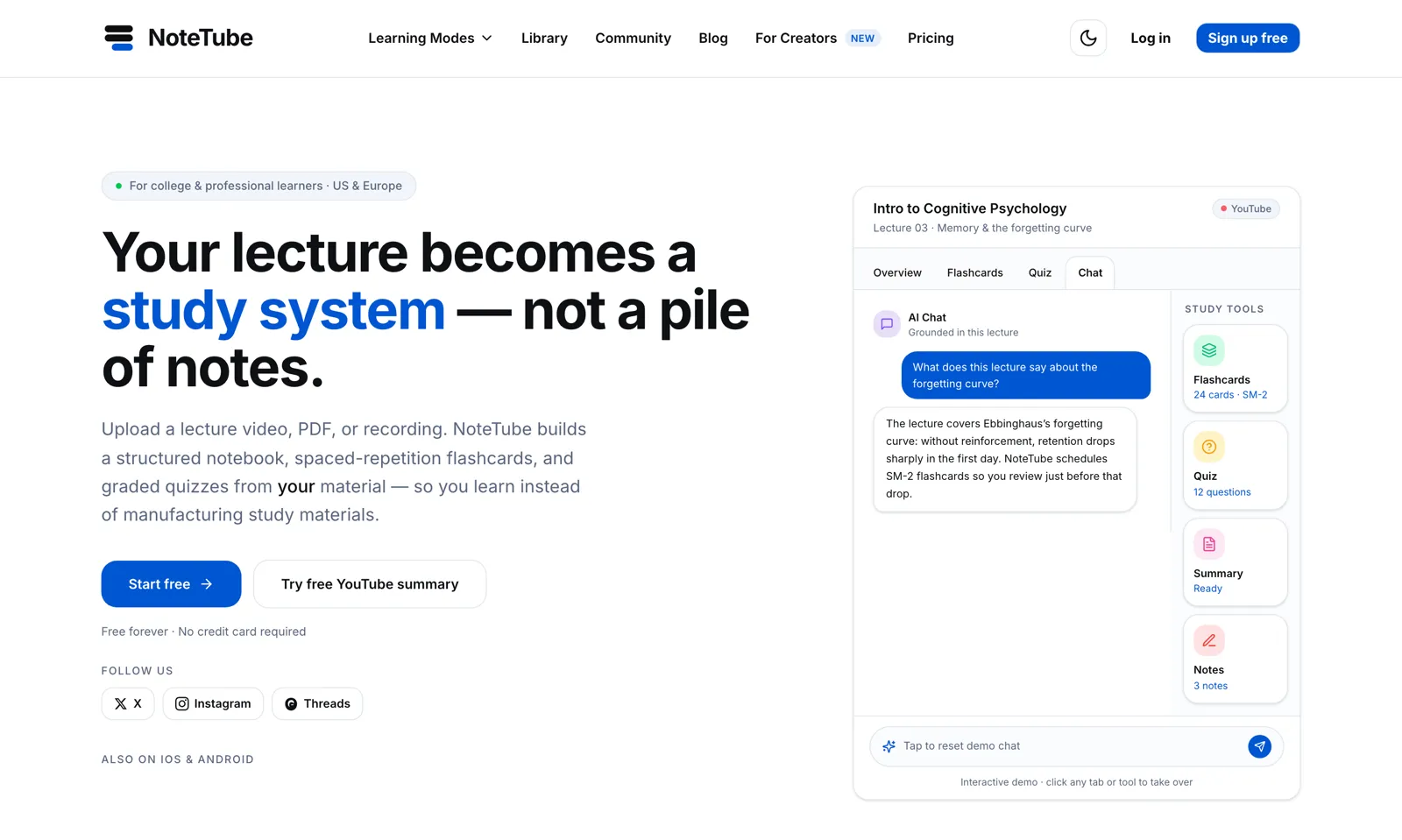
NoteTube
A lecture becomes a study system: chat, flashcards, quizzes, all grounded in the source.
An AI learning platform that turns PDFs, YouTube lectures, recordings, and notes into a structured notebook with grounded chat, spaced-repetition flashcards, and graded quizzes.
Web · iOS · Android · Chrome extension · MCP server
02Our product
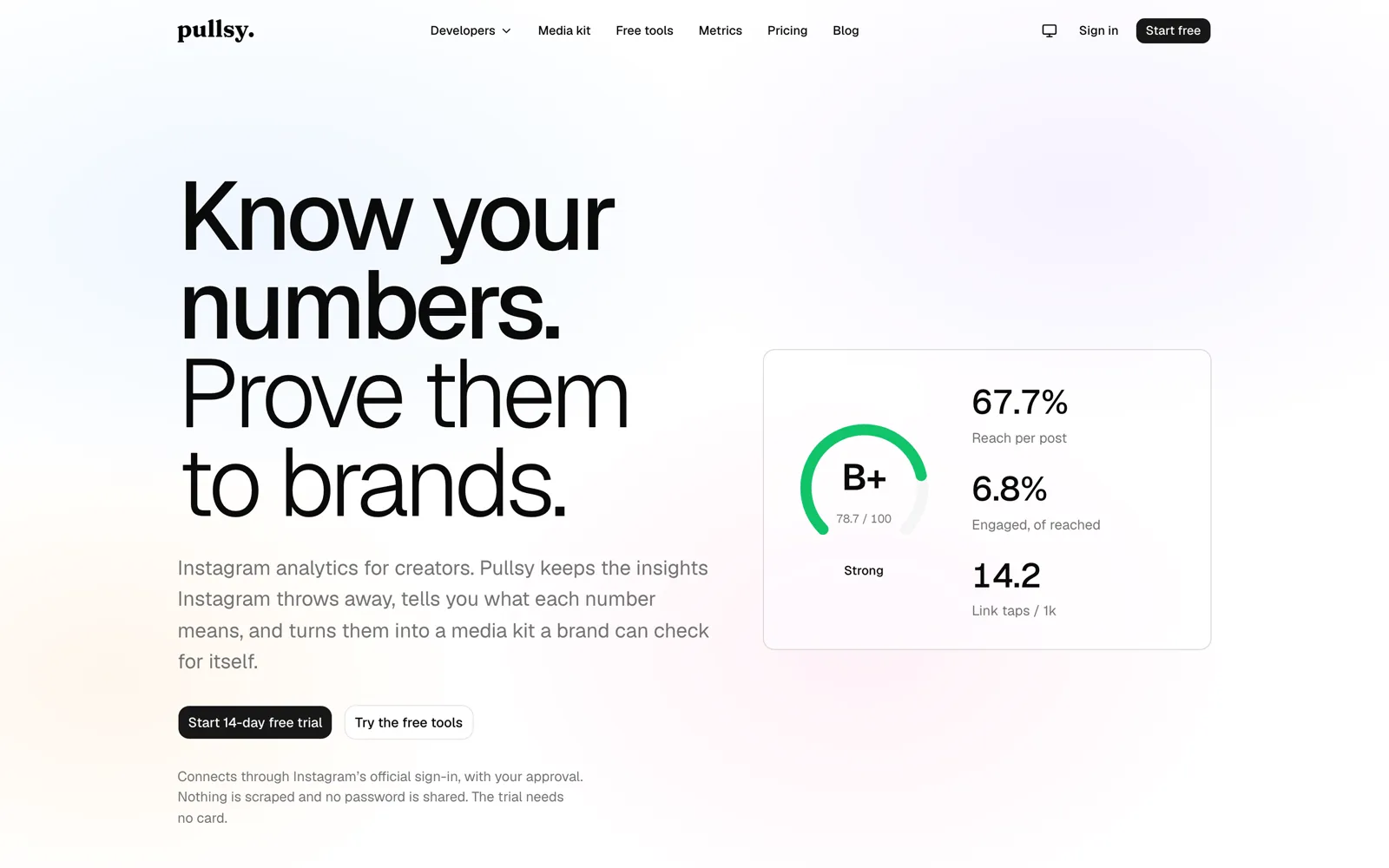
Pullsy
Instagram analytics that keep the numbers Instagram throws away.
Analytics for creators. Pullsy keeps insights Instagram discards after about 90 days, explains what each number means, grades the account, and turns it into a media kit a brand can verify.
Web · iOS (native SwiftUI) · REST API
Questions
Marketplace questions we get asked.
How do sellers get paid?
Through a payment provider built for marketplaces, such as Stripe Connect, which verifies sellers, holds their balances, and pays out to their bank. Your platform takes its commission at checkout.
Can you build a marketplace for India with Razorpay?
Yes. Razorpay has a split-payment product for marketplaces. We check which provider supports your sellers' countries and payout needs before choosing one.
Do we need a mobile app on day one?
Usually not. Most marketplaces start on the web and add apps once buyers come back often. If your sellers work from their phones, the seller side may come first.
How do you handle refunds and disputes?
Refunds come out of the right seller's balance through the payment provider, and disputes get an admin screen with the order history. We design both before launch, not after the first complaint.
Who owns the marketplace and its data?
You do: the code, the payment provider account, and the buyer and seller data.
What does the admin side of a marketplace include?
Seller approval, listing moderation, orders, refunds, disputes, commission settings, and payout reports. It is the part buyers never see and the part your team uses every day, so we design it with the same care.
Marketplace app development
Who buys, who sells, and how does the money move?
Thirty minutes on both sides of your marketplace. You leave with a written plan: scope, timeline, and a number.