Cloud cost optimization
A cloud bill that grows slower than your users.
Cloud cost optimization is cutting what you pay to run your product without making it slower or less reliable: fewer services to run, the right-sized ones, caching that saves requests, and storage you can move when prices change. Acasa Labs runs five products of its own, so we design for the bill. SigmaCPM, for example, runs its job queue in Postgres instead of paying for a separate broker.
The problem
The bill keeps growing, and nobody knows which feature it is.
Every new service added a line to the invoice: a queue here, a cache there, a database sized for a launch that never came. Images are fetched from storage on every view because the URLs change every time. The cloud bill grows faster than revenue, and because cost is not tracked per feature, nobody can say what to cut.
What we build
- 01
Fewer things to run
Consolidating services where one can do the job of three, such as a job queue in the database you already have.
- 02
Caching that saves requests
Images and responses served from the CDN instead of the origin, with URLs and headers that make caching work.
- 03
Storage and providers you can move
Storage and vendors behind a small interface, so moving to a cheaper provider is configuration, not a rewrite.
- 04
Serverless where it fits
Scheduled and spiky work on functions that cost nothing when idle, instead of servers kept running for a nightly job.
From production
Cost decisions from products we pay for.
No extra broker
SigmaCPMSigmaCPM runs its job queue in Postgres with leases, orphan reclaim, and skip-locked selection. That is one less service to pay for and one less to keep running.
Cache the images
KraftrKraftr keeps signed image URLs byte-identical within a day, so browsers and CDNs serve repeat views from cache instead of storage.
Storage you can swap
KraftrKraftr's storage provider is pluggable by config across Google Cloud Storage, Cloudflare R2, and local storage, so it can move where storage is cheaper.
No server for the reminders
GymFastGymFast's reminders, plan expiry, and auto check-out run as scheduled edge functions, so the automation keeps running without a server to pay for or babysit.
Honest trade-offs
When cost is not the problem to solve
If your cloud bill is small next to what the product earns, your time is better spent on growth. Cost work pays off when the bill is growing faster than revenue, when a single service dominates it, or when you are about to scale and want the unit cost right first.
What we reach for
- Google Cloud, AWS, Cloudflare
- Cloudflare R2, Google Cloud Storage
- Postgres job queues
- Supabase Edge Functions, Cloudflare Workers
- CDN caching
- Cost tracking per feature
Proof
Shipped, not pitched.
01Our product
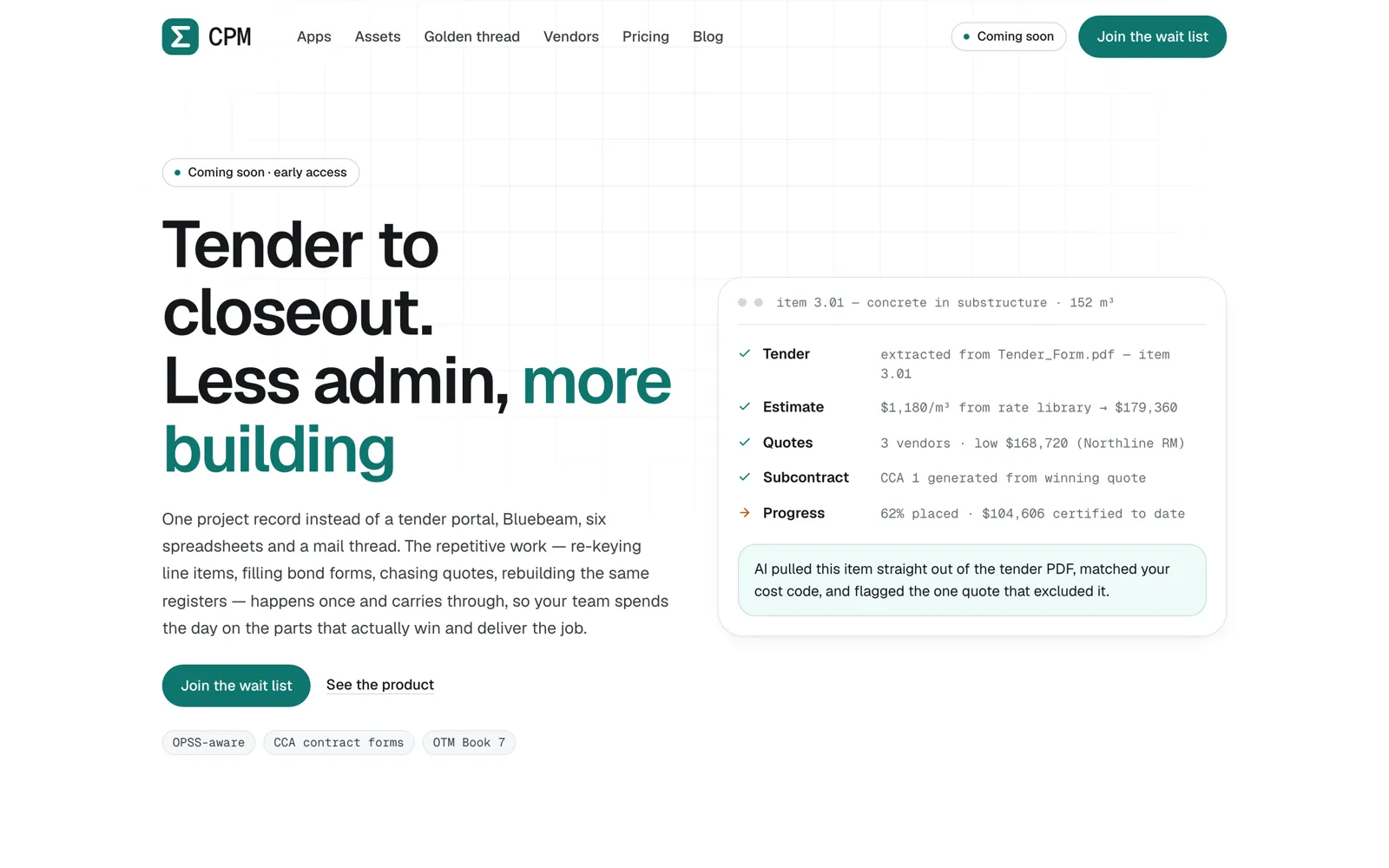
SigmaCPM
Construction project management where AI reads the tender and shows its work.
One project record for civil contractors, from tender to closeout: bids, contracts, RFIs, vendor quotes, and drawings. The AI pulls line items and bond terms out of tender PDFs and cites the page for every value.
Web · API · Chrome extension
02Our product
Kraftr
One flat-lay photo becomes catalog-ready 4K on-model imagery.
An AI catalog studio for fashion and jewelry brands. Upload one flat-lay or hanger shot per SKU and get on-model imagery at up to 4K, in ten aspect ratios, sized for Amazon, Myntra, Flipkart, and Shopify.
Web · iOS · Android
03Our product
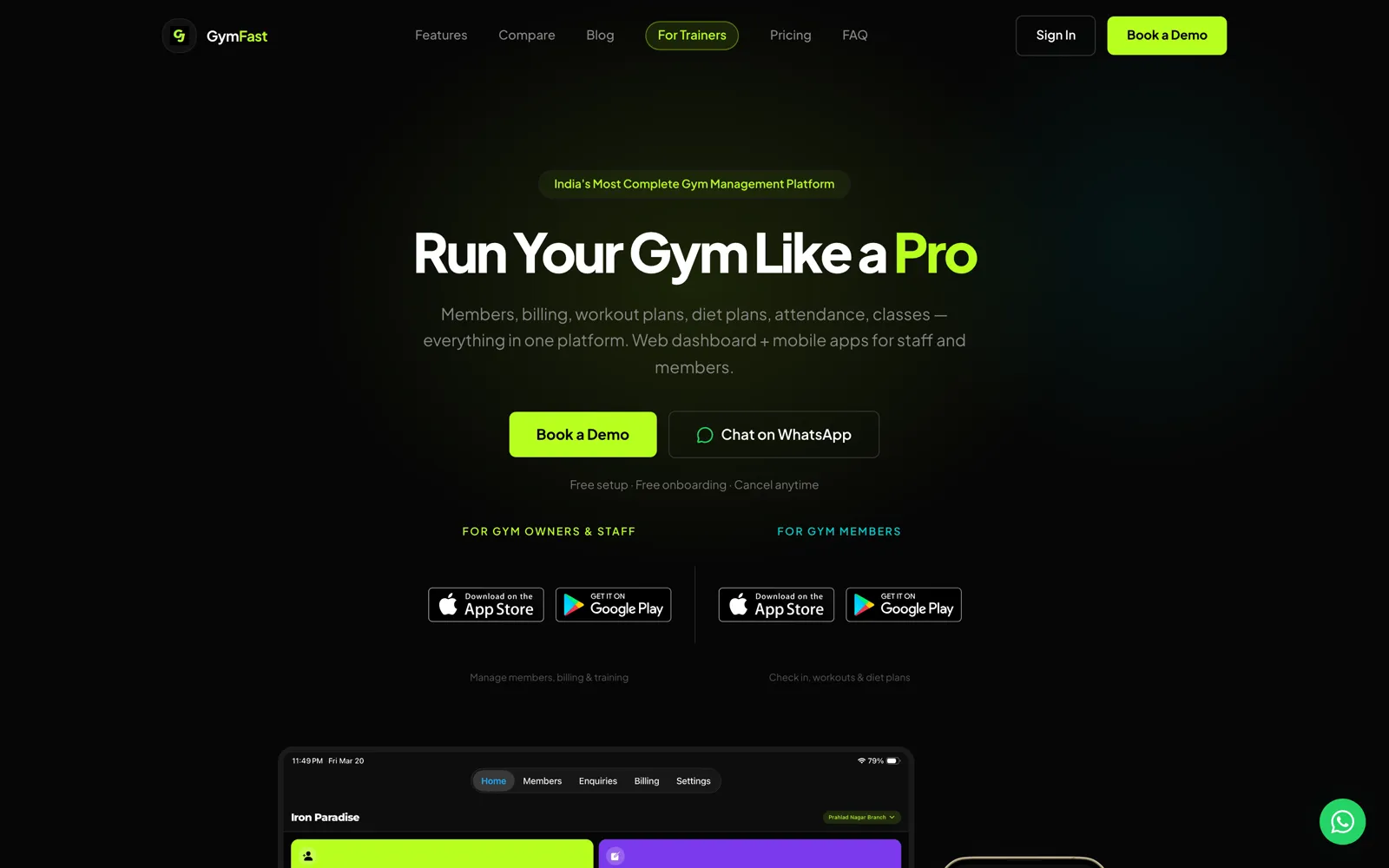
GymFast
Members, billing, classes, and workout plans for a gym, in one platform and three apps.
Gym management software for gym owners and personal trainers. A web dashboard and a staff app run members, plans, invoices, enquiries, and classes; members get their own branded app; GymFast Pro gives independent trainers the same tools for their clients.
Web dashboard · iOS · Android · Staff, member, and trainer apps

Questions
Cloud cost optimization questions we get asked.
Where does cloud waste usually come from?
Services sized for traffic that never came, separate services that the database could handle, uncached images and responses, and servers kept running for work that happens once a day.
Will cutting costs make the app slower?
It should not. Most savings, like caching and removing idle services, make the app faster as well. We measure performance before and after any change.
Can you move us to a different cloud?
Yes, when the numbers justify it. Moving storage is often simple; moving a whole product takes more planning, and we would only recommend it with a clear saving.
Do you work with AWS, Google Cloud, and Cloudflare?
Yes. Our own products run across Google Cloud, Cloudflare, Railway, Supabase, and Firebase, and we work in whichever account you already have.
What about our AI model costs?
That is its own problem with its own fixes. See our page on LLM cost optimization.
Cloud cost optimization
Send us last month's cloud bill.
We will tell you where the money is going, what we would cut first, and what it would cost to do it.